Home / How to play
How does a first 13-card table actually run?
Deal thirteen. Draw one. Discard one. Group a pure sequence before you touch the declare button.
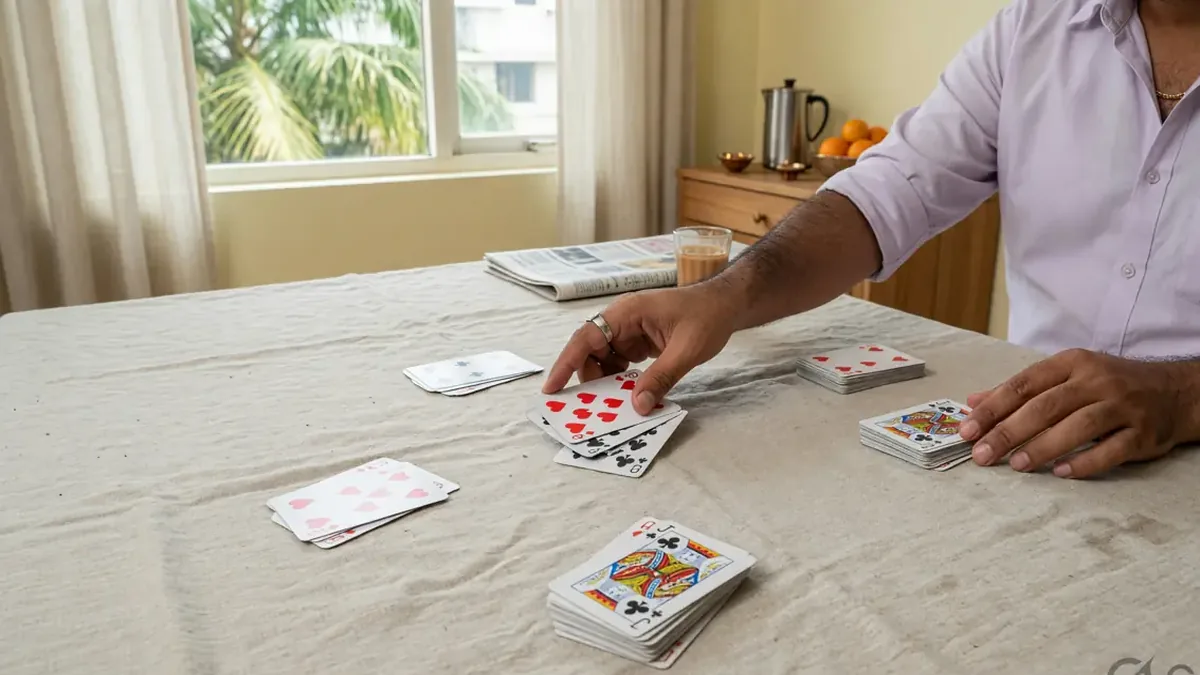
The answer in one line, then the order
A first table is a sequence of legal moves, not a personality test. If you can keep thirteen cards, form one pure sequence, and avoid an invalid declare, you have completed the job this note exists to teach.
Everything else is decoration. Tutorials that start with “be fearless” or “think like a winner” are skipping the part that costs money. The walk below is before, during and after one deal.
Pre-flight, then the deal
One ordered list. Later checks stay as sentences so the sequence stays unique.
- Confirm the format chip Points, pool or deals. If the chip is missing, leave. The games catalogue explains why the chip matters.
- Find the drop costs First drop and middle drop, if the table publishes them. Memorise them before the first card moves.
- Set a stop outside the product A clock you can see. A payment limit at the bank or UPI app. Do not wait for an in-product control that may not exist.
- Know the declare rule Valid groups, including one pure sequence. An invalid declare is usually scored at full remaining value.
- Know the exit How to leave the table, and where account deletion lives if you are done with the product.
During the hand: the pure sequence is the gate
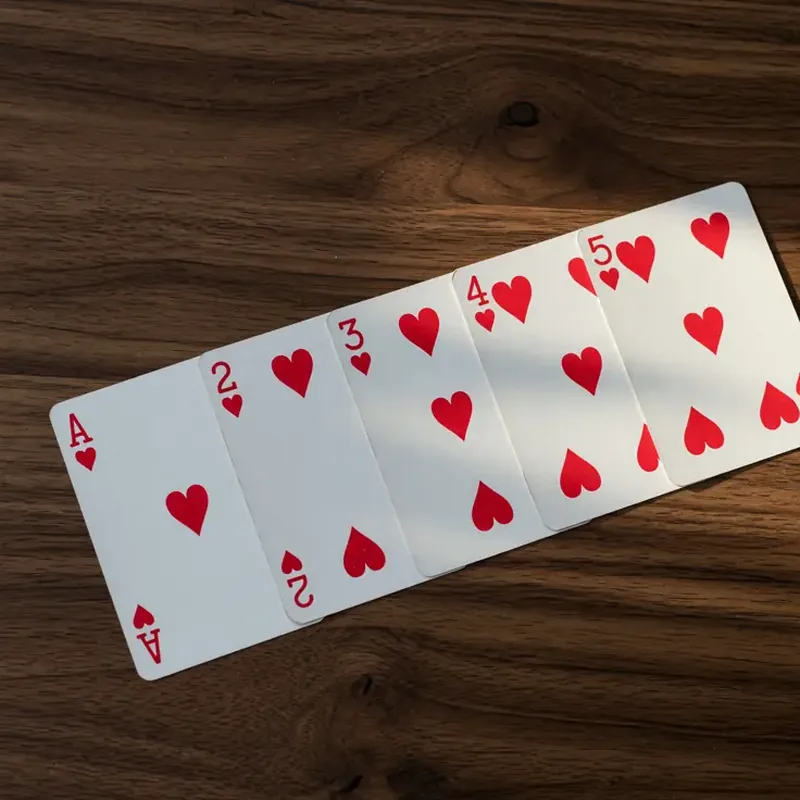
After the deal you hold thirteen cards. You will draw one and discard one on each turn, so the hand stays at thirteen. The first grouping job is a pure sequence: consecutive cards of the same suit, with no joker standing in.
Sets (same rank, different suits) and a second sequence can wait. Players who build pretty sets first and leave the pure sequence “for later” are the ones who declare invalidly. Later is often too late.
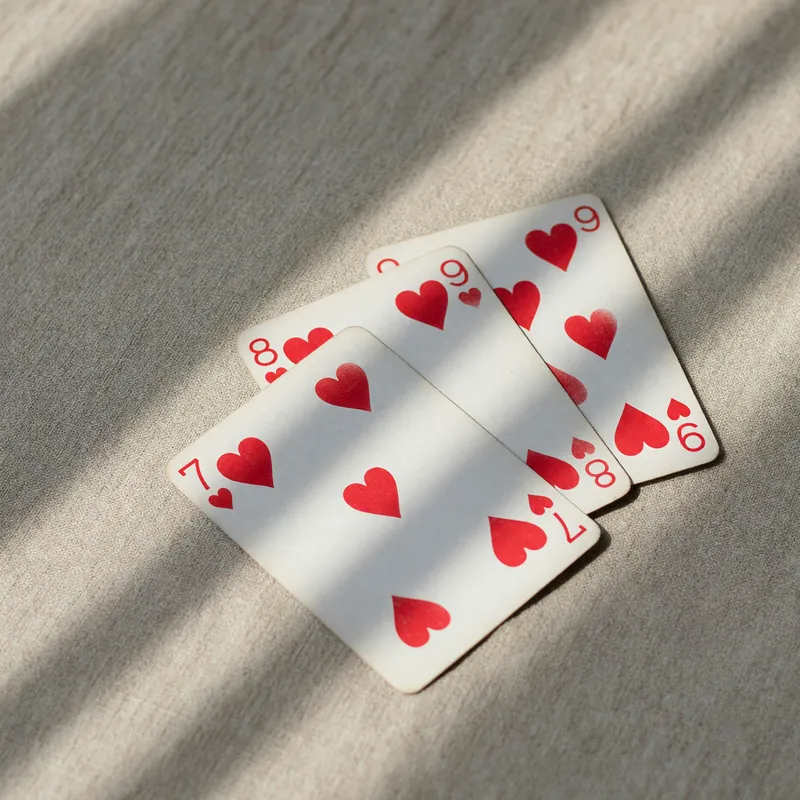
A valid set is useful. It is not the gate.
A set is three or four cards of the same rank in different suits. It is a legal group. It does not replace the pure sequence. A joker can sit in a set. That still does not create the pure sequence you skipped.
If the open discard would complete a set you already hold, taking it is reasonable. If it is merely a pretty card, the stock is usually the cleaner unknown.
After the hand: declare only when the groups are real
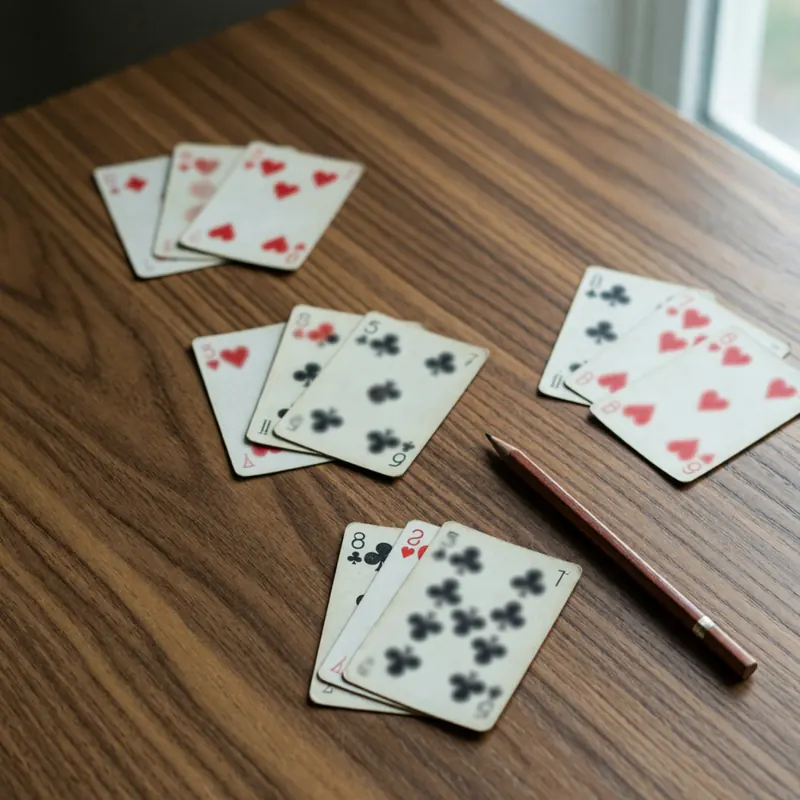
A declare is a claim that every card sits in a legal group and that the pure sequence is present. The table will check. If the check fails, the usual price is the full remaining hand value, not a slap on the wrist.
The first stage after a failed declare is to stop dealing a second hand on tilt. The second stage is to rehearse the grouping with a physical deck. The third stage, if the product is the problem rather than the rule, is to leave it.
Drop, middle drop and the moment you should use them
A first drop is the cheapest published exit, used before you have drawn. A middle drop costs more and is used after you have seen the hand develop. Both exist because some hands do not contain a path to a pure sequence.
There is no bravery award for skipping a published drop. The strategy note discusses when holding a joker changes that math. This walk only insists you know the buttons exist before you need them.
What this walk will not do
It will not promise a win rate. It will not rank luxcasino against unnamed rivals. It will not turn into an access guide. Login, app permissions and APK sideload risk are separate tasks with their own routes.
If the order of operations is now clear, the next useful read is either strategy limits or the first-launch permission walk.
First-table questions
What is the one thing a first table cannot skip?
A pure sequence. Without it, the rest of the grouping usually fails at declare.
Should I take the open card or the stock?
Take the open card only when it completes a group you already almost have. The stock is unknown. That is the whole distinction.
When is a drop cheaper than playing on?
When you cannot see a pure sequence forming and high cards are still in hand. The published drop is usually cheaper than an invalid declare.
How many cards do I discard?
One, after you draw. The hand stays at thirteen.
Does this walk include winning systems?
No. Strategy limits live on the strategy note. This walk is order of operations.
Can I practise the declare offline?
Yes. A physical deck is enough to rehearse grouping before you open any product.
Where do permissions and APK risks sit?
On the app and apk-download notes. They are access tasks, not table rules.
What is the next task after this walk?
Either read strategy limits or, if you only needed the order, open the app note.
Sorting the hand without turning the table into a puzzle app
Sort by suit first if that helps you see runs. Sort by rank first if you are hunting sets. Either method is fine. Switching every ten seconds is not a method. It is delay.
Keep the prospective pure sequence together physically, even in an on-screen hand. If the interface lets you lock a group, lock only the pure sequence until it is real. Locking a hopeful set teaches the wrong priority.
Common first-table errors that are rules, not bad luck
Declaring with a joker inside the only sequence. Holding four aces and calling it a set on a table that rejects a four-of-a-kind. Forgetting to discard after a draw and then stabbing declare. These are sequence errors.
The repair is rehearsal with a physical deck, not a second deposit. If the interface itself made the discard impossible, that is a product defect and belongs on the reviews ledger, not on your self-talk.
After a valid declare: read the slip before the next deal
A valid declare is not a reason to raise the stake. It is a reason to read how the table scored leftover points. If the slip does not match the published rule, stop. Screenshot if the product allows it. Then use the operator process, not a social rumour.
The next editorial door is strategy limits if you want to know what skill cannot fix. The next access door is the app note if you still have not opened a client.
If the slip matches the rule and you are still calm, you may deal again. Calm is part of the sequence. A second deal thrown in anger is how a first-table lesson becomes a session you will not want to describe later.
Practising the sequence with a physical deck
Take a standard 52-card deck plus printed jokers if you have them. Deal thirteen to yourself and thirteen face down as a dummy opponent. Turn one open card. Play both sides slowly. Force yourself to form a pure sequence before you allow a declare.
Do this three times. The point is not to invent a training montage. The point is to feel how often the pure sequence is obvious and how often it is not. That feeling is cheaper at a kitchen table than on a first deposit.
When the physical sequence is boring, you are ready for a product. Boring is the goal.
When the interface hides the discard
Some clients stack buttons so declare sits where discard should sit. If you cannot find discard, do not press the larger button out of panic. Leave the table and write down what the screen showed.
That note belongs with customer care and with the reviews ledger. It is not a personal failure. It is a labelling failure.